OpenBusiness by Tradebook
Product
Cleaning and facility management

Staffing contracts by site, special services, supplies at cost, AIU and per-worker annex.

SCPEAB
Private security

Staff per post with surcharges, uniforms and PPE with signed records, training with expiry dates.

SCPEFI
Temporary staffing and outsourcing

Workers on assignment, pre-invoice per worker, electronic payroll and PILA costed to the client.

PESCFI
Distribution and consumer goods

Routes and collections with Trade360, inventory movement records per warehouse, filling and packing, catch weight, batch labels.

COABSC
Retail, stores and restaurants

Point of sale with electronic POS document, online store, marketplaces and inventory.

COABFI
Importers and trading companies

Import and export checklists, import declaration costs included in inventory and foreign currency operations.

ABFICO
Manufacturing and industry

Recipes and bills of materials, production orders, actual cost, make-to-order, purchasing and batches.

ABPEFI
Technical service and maintenance

Field work orders with forms and evidence, support with agreed response times and spare parts tracked in inventory.

SCABCO
Government contractors and suppliers

Contracts with Colombia’s SECOP II procurement platform, adjustments based on inflation, minimum wage or tax units, agreed service times, insurance policies and document history.

SCFIPE
Agribusiness

Harvest or livestock intake with weighing, quality and settlement; batches and traceability; field staff.

SCPEAB
Food and beverage

Batch recipes, signed critical control points, traceability to origin, catch weight and harvest settlement.

ABFICO
Chemicals, cleaning products and cosmetics

Percentage formulas with versions, pH and viscosity as critical points, health notification and data sheets.

ABFICO
Recommended suites:COSalesSCServices and ContractsABSupply and ProductionFIFinancePEPeople
Sector pack · Food machinery

Production for machinery and metalworking Every order, a custom solution: own recipe, subcontracting at cost and as-built per serial

The metalworking pack gets the shop ready for engineer-to-order (ETO) work: a multi-level bill of materials with the electrical kit as a phantom subassembly, a recipe per order cloned from a template and editable for each customer, engineering changes with line-by-line differences, a routing with subcontracted laser cutting that enters the order cost, finite-capacity backward scheduling from the delivery date, factory acceptance tests that block shipping if they fail, a serial number plate, an as-built that records which sheet and which components each machine carries, and a spare parts list per serial.

Back to Production

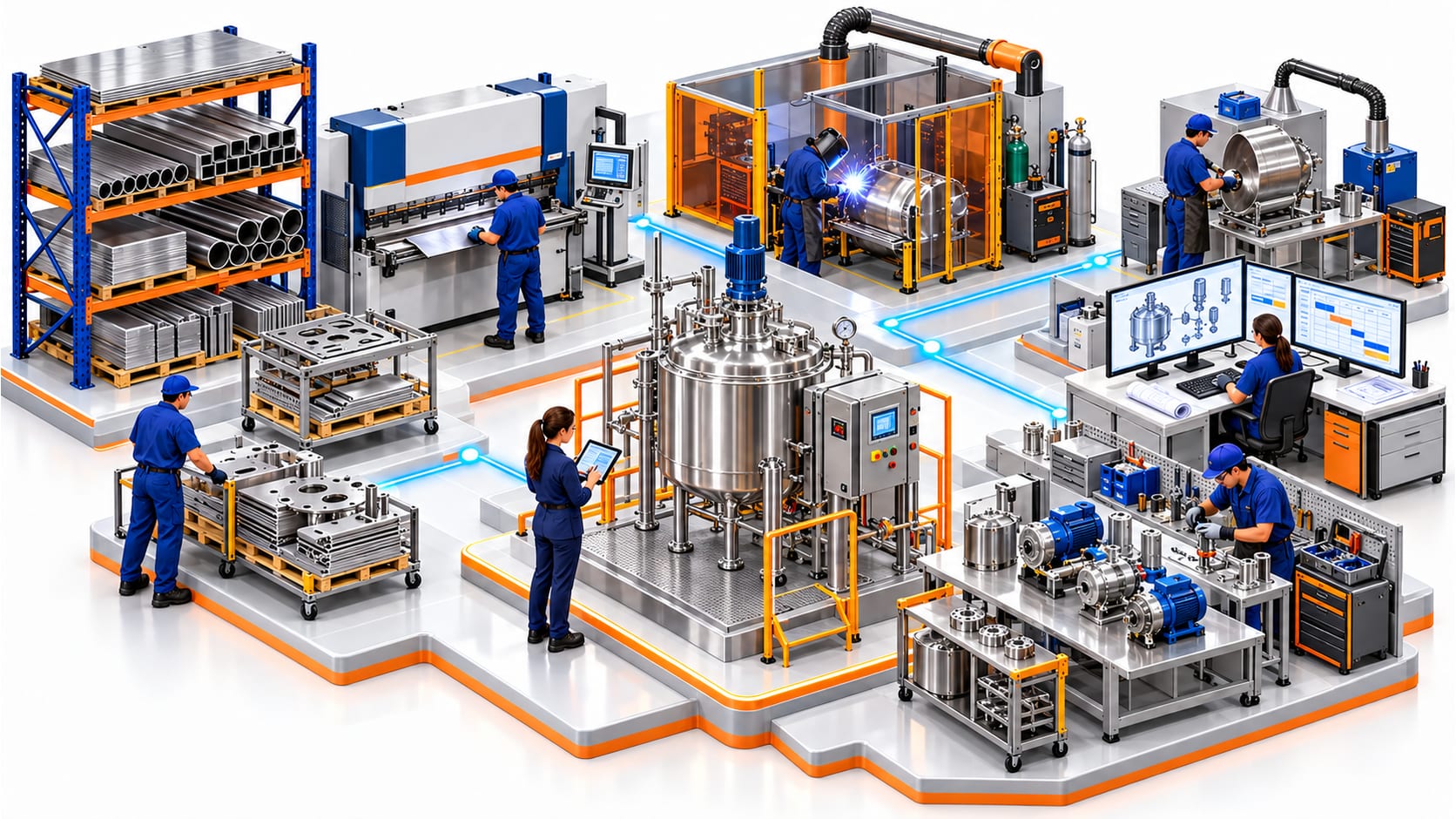
Metalworking shop with a stainless steel jacketed kettle being assembled, TIG welding in the background and a technician checking the bill of materials on a tablet

Who it is for

  • ✓Builders of food machinery and stainless steel equipment that work to order, where every machine is different.
  • ✓Shops that subcontract laser cutting, galvanizing or painting and need that service to enter the cost of each order.
  • ✓Companies that deliver serialized equipment and must answer, years later, which sheet, which motor and which spare parts each one carries.
  • ✓Builders of structures, panels and custom furniture that quote by engineering and want to compare the estimate with the actual.

The shop's process, step by step

From the quote to after-sales service, every step happens on a Production screen and leaves its lot, its cost and its evidence.

  1. Quote with engineering estimate

    The quote breaks down its components: materials (stainless sheet and tube, motor, gearbox, controller), design and shop labor, equipment and subcontracting. That estimate is later compared with the order's actual cost, category by category.

  2. Multi-level bill of materials

    The machine's template is an assembly: 2 mm 304 stainless steel sheet, sanitary tube, gearbox, sanitary gasket and the electrical kit (motor, controller and cable) as a phantom subassembly, which explodes into its components without ever existing in inventory. The spare parts list is a separate recipe.

  3. Sheet intake with mill certificate

    The sheet arrives by lot with its mill certificate. A receiving inspection requires the heat number and the verified certificate before it is used, and the document is filed in the lot record.

  4. The order with its own recipe

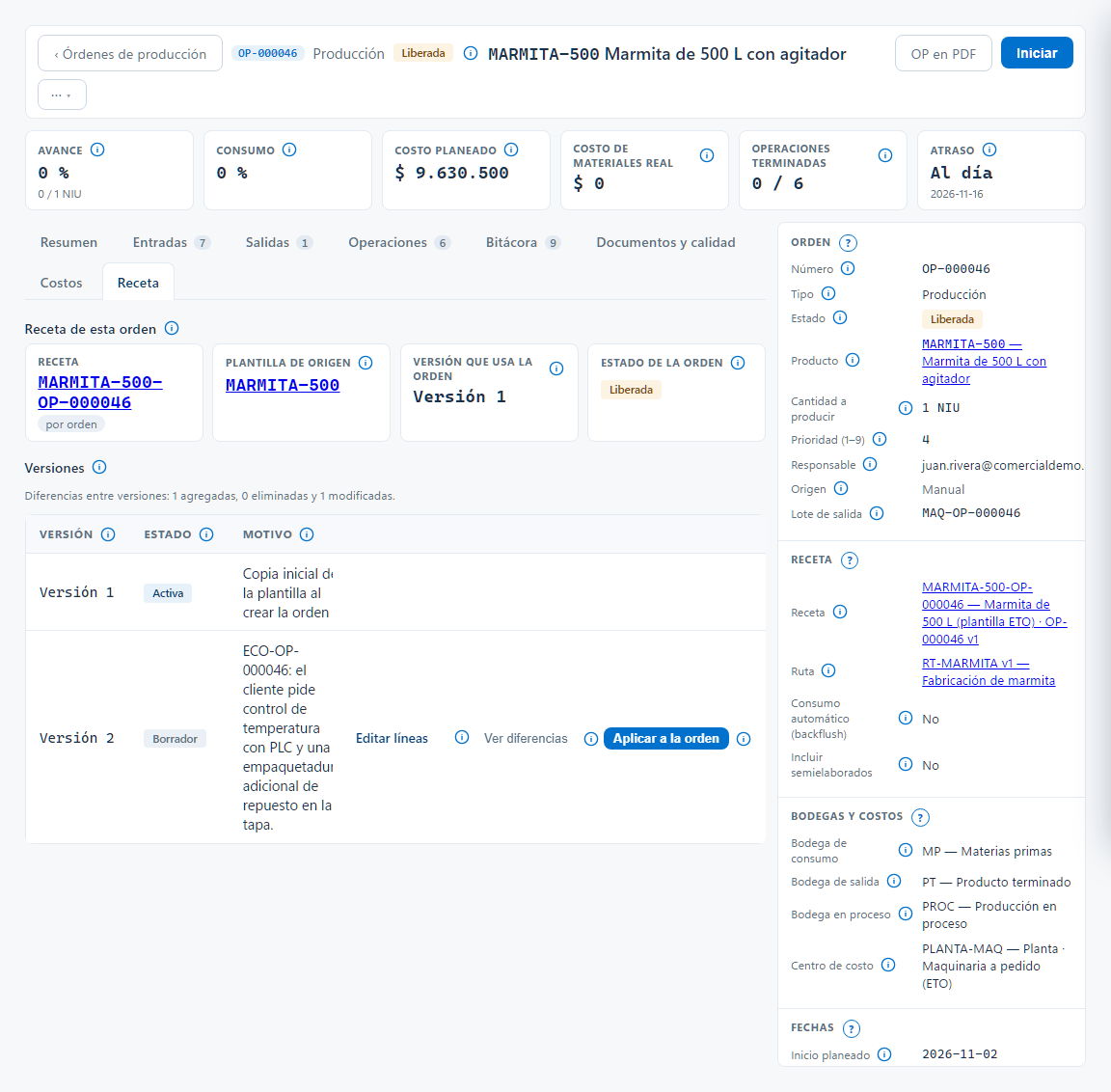
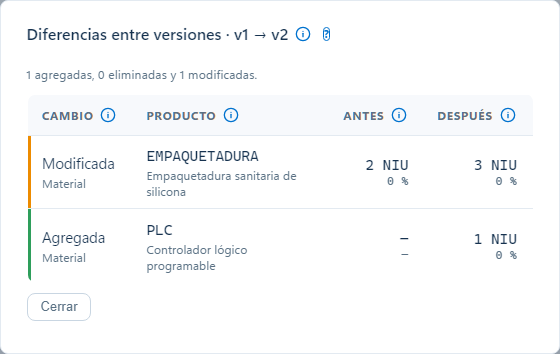
    The order is created from the sales order or the project and clones the template into an exclusive recipe, editable while it is planned. Changes after release go through an engineering change order (ECO), with a reason and line-by-line differences against the template.

  5. Subcontracted laser cutting

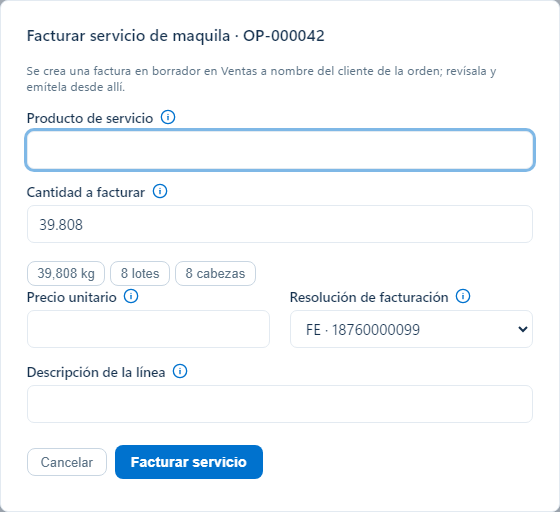
    The machine's routing starts with laser cutting at an external work center. The sheets go out to the cutter's custody warehouse and come back cut; the purchase invoice for the service is linked to the order and enters its cost as subcontracting.

  6. Bending, welding, polishing and assembly

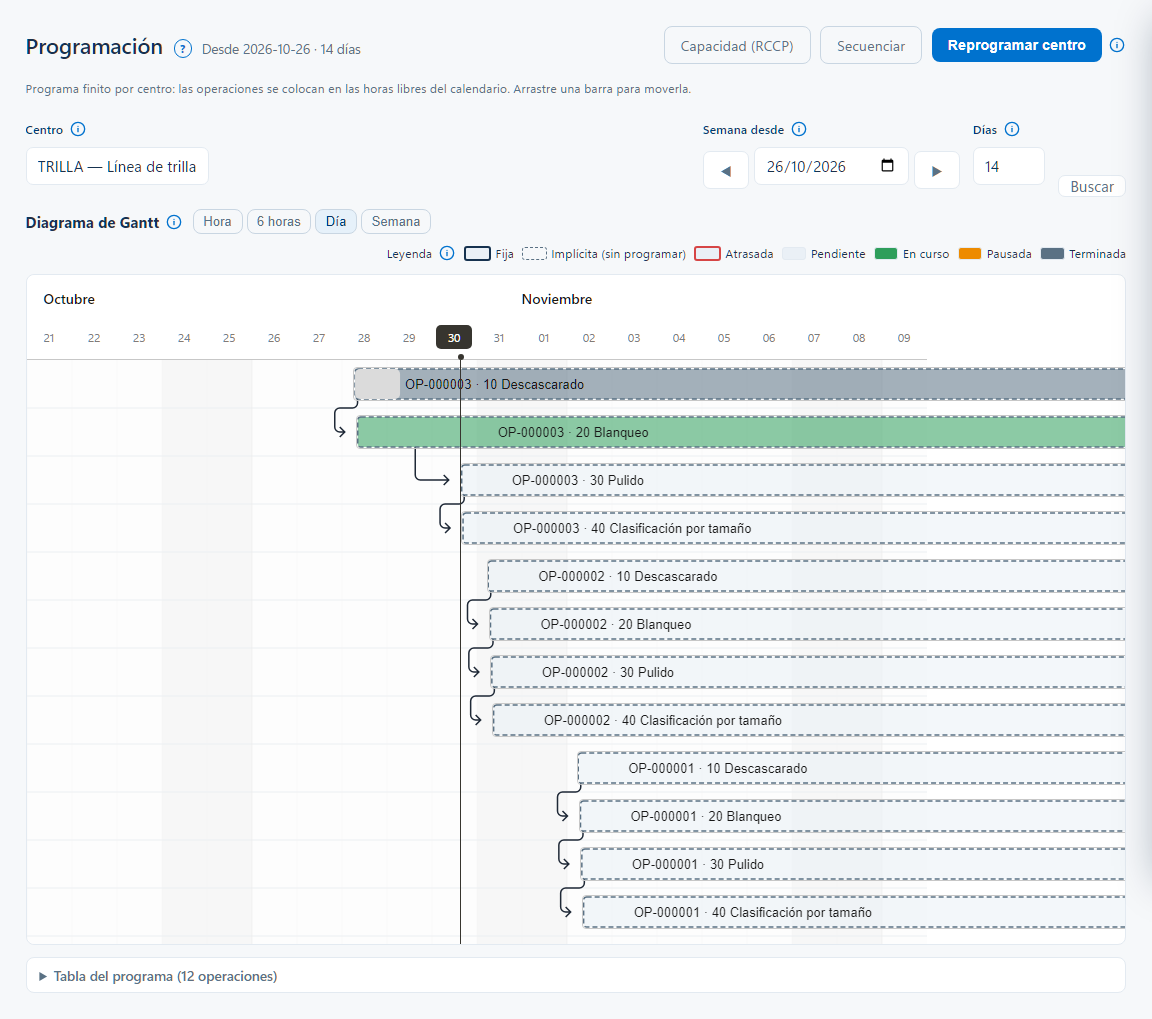
    Bending and rolling on the press brake, TIG welding, sanitary polishing and mechanical and electrical assembly, each operation at its work center with setup and run time. Finite-capacity backward scheduling starts from the delivery date, and sequencing groups the 2 mm and 3 mm jobs on the press brake so the 20-minute die changeover is paid only once.

  7. Factory acceptance tests

    The factory acceptance test (FAT) inspection includes a hydrostatic test of the jacket, an electrical and safety test of the panel, roughness of the sanitary finish (maximum 0.8 µm), agitator and tilt operation, and the signature of the inspector and the customer on the report. If it fails, the machine is blocked for shipping.

  8. Serial, nameplate and as-built

    The machine leaves with a serial number and an identification plate. On closing the order, the as-built is frozen with a fingerprint: which sheet (heat lot), which motor and which components that serial carries, as a PDF.

  9. After-sales: spare parts per serial

    The service team opens the serial and downloads the spare parts list of the delivered machine (gasket, motor, gearbox) as a PDF. The serial's traceability reaches the sheet lot and its mill certificate.

What the pack installs

01Ten products

2 mm AISI 304 stainless steel sheet, 304 sanitary tube, 1 HP motor, gearbox, controller, electrical cable, silicone sanitary gasket, electrical kit (phantom), 500 L jacketed kettle with agitator and spare parts kit, with five categories.

02Six work centers

Laser cutting (external, subcontracted), CNC press brake, TIG welding, sanitary polishing, mechanical and electrical assembly, and factory acceptance tests.

03Machine manufacturing routing

Laser cutting, bending and rolling, TIG welding, sanitary polishing, mechanical and electrical assembly and factory acceptance tests, with setup and run time per operation.

04Three template recipes

Electrical kit (phantom assembly), 500 L jacketed kettle as an engineer-to-order template and the kettle's spare parts list.

05Acceptance tests and mill certificate

Acceptance test plan with five tests and the customer's signature, and a receiving plan that requires the sheet's mill certificate.

06Changeover matrix

Die and punch changeover minutes on the press brake between 2 mm and 3 mm, so that sequencing groups the jobs.

07Machine nameplate

Label template for the identification plate with the serial and the barcode.

08Shop terminology

"Bill of materials (BOM)", "Components", "Assemblies", "Serial" and "Shop operation" on the screens.

09Demo mill certificate

A mill certificate registration for a sheet lot, linked to the product, with validity, to see how traceability reaches from the serial to the certificate.

10Demo data

Steel and component suppliers, the laser cutter as a subcontractor, sheet stock and the full scenario of a kettle for a customer.

Case

Example: a 500 liter jacketed kettle for a customer

Figures from the demo company, as they appear on the screens.

500 Lstainless steel jacketed kettle built to order for a customer
COP $9,378,719.01actual cost of the order, laser cutting subcontract included
1 serialwith its frozen as-built: sheet lot, motor and controller
1 subcontractfor laser cutting: sheets into the cutter's custody and the invoice charged to the order
1 phantomthe electrical kit, which explodes into its components in the bill of materials without passing through the warehouse

The order cloned its recipe from the template and the Recipe tab shows the differences against it. The sheets from the heat lot went out to the cutter's custody and came back cut; the service invoice was linked to the order and appears on its cost sheet. The service team downloads the serial's spare parts list, and the shop schedules bending, welding and polishing on the Gantt. If the order comes from a project, its planned and actual cost appears on the project card.

Regulations it covers, and how

Resolution 683 of 2012: food contact materials

Only materials fit for food contact. The machine's bill of materials documents every component and its lot, and the serial's traceability reaches each one.

Resolution 4142 of 2012: metallic materials

Stainless steel from positive lists with evidence per sheet lot. The receiving inspection requires the mill certificate before the sheet is used, the certificate is filed in the lot record and the serial's as-built says which heat each machine carries.

Resolution 2674 of 2013: sanitary design

The factory acceptance test report documents the sanitary finish (roughness) and operation, with the signature of the inspector and the customer; if it fails, the machine is blocked for shipping.

Connected with the rest of OpenBusiness

The machine's order is created from the sales order or the project and its cost flows back to them: purchasing, projects, customers and suppliers and accounting without anyone typing twice.

  • ✓"Create production order" from the sales order or from the project; the order keeps its origin.
  • ✓The laser cutter's purchase invoice is linked to the order as subcontracting and appears on the cost sheet.
  • ✓The toll ledger says how much of your sheet the cutter holds in custody.
  • ✓The project card shows the planned and actual cost of its orders, and the comparison with the quote goes category by category.
  • ✓Every order leaves consumption, labor, subcontracting, overhead and completion in accounting.
  • ✓Welding and polishing hours flow into the cost sheet from the terminal or from time clock punches.

Your plant at a glance

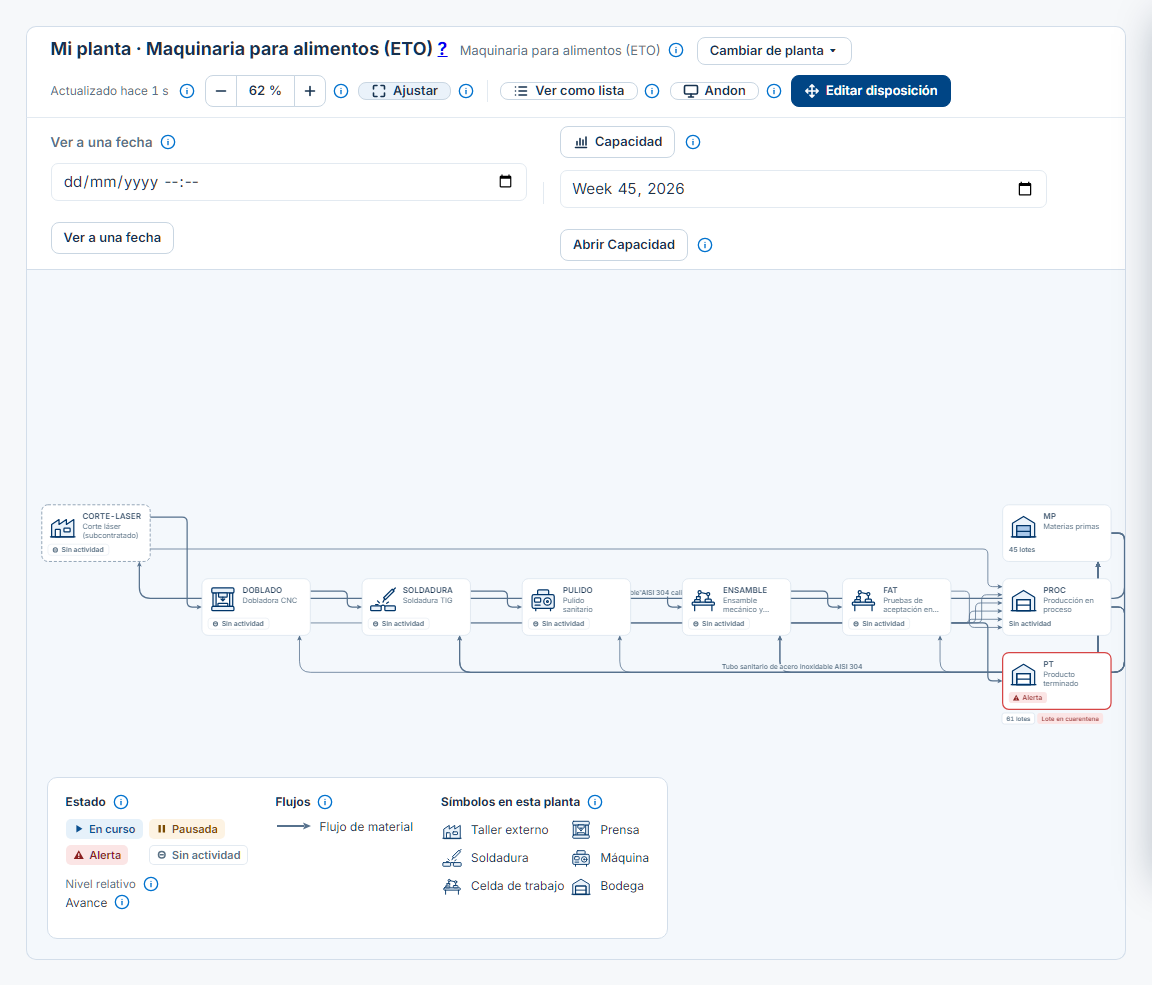
My plant draws the pack's shop: laser cutting at the external shop, the press brake, welding, polishing, assembly and acceptance tests. You see which order is moving in each cell, which sheets are at the cutter's and which operation was paused and why.

My plant for the metalworking shop with external laser cutting, press brake, welding, polishing, assembly and tests, each one with its status
The shop in My plant, from laser cutting to acceptance tests.

What it looks like

Recipe tab of an engineer-to-order production order with the differences against the template
The order's own recipe and its differences against the template.
Engineering change dialog with the line-by-line differences
An engineering change, line by line.
Dialog for sending material to a subcontractor's custody
The sheets go out to the laser cutter's custody.
Shop Gantt with the bending, welding and polishing operations
The shop scheduled on the Gantt.

Frequently asked questions

Can every machine have its own bill of materials?

Yes. The order clones the template into an exclusive recipe, editable while it is planned. After release, changes go through an engineering change with a reason and line-by-line differences, and the template stays intact for the next order.

How does laser cutting enter the cost?

The cutting operation is marked as subcontracted with its vendor. The sheets go out to the vendor's custody warehouse, come back cut, and the purchase invoice for the service is linked to the order as subcontracting.

What does the as-built store?

On closing the order, the serial's as-built is frozen with a fingerprint: sheet lots with their mill certificate, motor, gearbox, controller and the other components consumed for that machine, as a PDF.

How do I handle spare parts?

The spare parts list is a separate recipe. For every delivered serial, the service team downloads the list as a PDF and knows which spare parts that machine carries.

Can I import the cutting program?

Yes. The importer takes the report from your nesting software and prorates sheet and minutes among the orders that shared the sheet.

How do I compare the quote with the actual?

The order shows the quote estimate against the actual cost by category (materials, labor, subcontracting, overhead), and if it came from a project, the project shows the planned and actual cost of its orders.

What happens if the acceptance tests fail?

The machine is blocked for shipping until it is corrected and the inspection is approved with the signature of the inspector and the customer.

See your shop in OpenBusiness

Try the metalworking pack's demo data, download the brochure or talk to sales and we will show you the recipe per order, subcontracting and the as-built with your own figures.

✓ Ten products
✓ Six work centers
✓ Machine manufacturing routing