OpenBusiness by Tradebook
Product
Cleaning and facility management

Staffing contracts by site, special services, supplies at cost, AIU and per-worker annex.

SCPEAB
Private security

Staff per post with surcharges, uniforms and PPE with signed records, training with expiry dates.

SCPEFI
Temporary staffing and outsourcing

Workers on assignment, pre-invoice per worker, electronic payroll and PILA costed to the client.

PESCFI
Distribution and consumer goods

Routes and collections with Trade360, inventory movement records per warehouse, filling and packing, catch weight, batch labels.

COABSC
Retail, stores and restaurants

Point of sale with electronic POS document, online store, marketplaces and inventory.

COABFI
Importers and trading companies

Import and export checklists, import declaration costs included in inventory and foreign currency operations.

ABFICO
Manufacturing and industry

Recipes and bills of materials, production orders, actual cost, make-to-order, purchasing and batches.

ABPEFI
Technical service and maintenance

Field work orders with forms and evidence, support with agreed response times and spare parts tracked in inventory.

SCABCO
Government contractors and suppliers

Contracts with Colombia’s SECOP II procurement platform, adjustments based on inflation, minimum wage or tax units, agreed service times, insurance policies and document history.

SCFIPE
Agribusiness

Harvest or livestock intake with weighing, quality and settlement; batches and traceability; field staff.

SCPEAB
Food and beverage

Batch recipes, signed critical control points, traceability to origin, catch weight and harvest settlement.

ABFICO
Chemicals, cleaning products and cosmetics

Percentage formulas with versions, pH and viscosity as critical points, health notification and data sheets.

ABFICO
Recommended suites:COSalesSCServices and ContractsABSupply and ProductionFIFinancePEPeople
Sector pack · Pork processing

Production for pork processing From farm to fork: finishing, slaughter, cutting with actual weight and the per-head levy

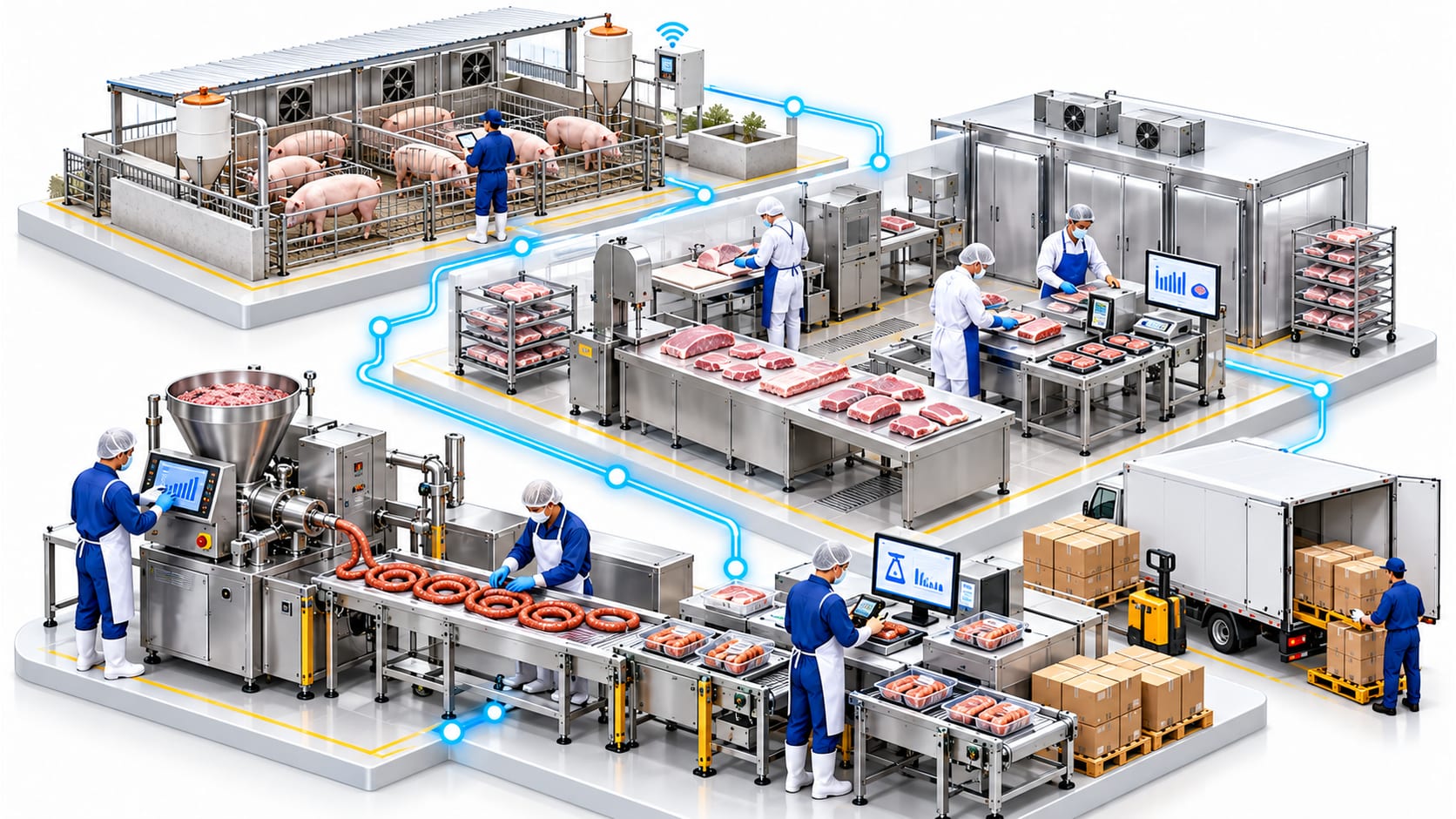
The pork pack takes the hog from farm to fork: the finishing lot as a long-running order that consumes feed and medications with their withdrawal period, animal intake with a movement permit, ante-mortem inspection and a per-head levy, slaughter and cutting as breakdown recipes with the actual weight of every cut, chorizo with controlled cooking, the catch weight barcode label, toll processing for customers who bring their own carcass, and the levy and animal inventory reports.

Back to Production

Cutting room with pork cuts on a scale, catch weight labels and an operator recording the weighing on a tablet

Who it is for

  • ✓Pig farms that run finishing lots and need the cost per live kilogram and control of the withdrawal period.
  • ✓Slaughter and cutting plants that receive animals with a movement permit, settle with the producer and collect the per-head levy.
  • ✓Cutting rooms that sell by the piece and charge by the actual kilogram, with a catch weight label.
  • ✓Plants that provide cutting services to customers who bring their own carcass.
  • ✓Sausage makers with cooking as a critical control point.

The process, from farm to fork

Every step happens on a Production screen and leaves its lot, its cost and its evidence.

  1. Farm: the finishing lot

    A lot of piglets per pen and stage is a long-running production order with the growth recipe: it consumes compound feed by week and medications with their withdrawal period (for example, 14 days), records mortality and delivers live hogs with their cost per kilogram. A medication with a withdrawal period blocks slaughter until that date.

  2. Movement permit

    Animals move under the internal animal movement permit (GSMI) per trip, kept as a registration with its number and validity. The farm has its ICA premises registration on the supplier card (ICA is Colombia's agricultural authority).

  3. Animal intake

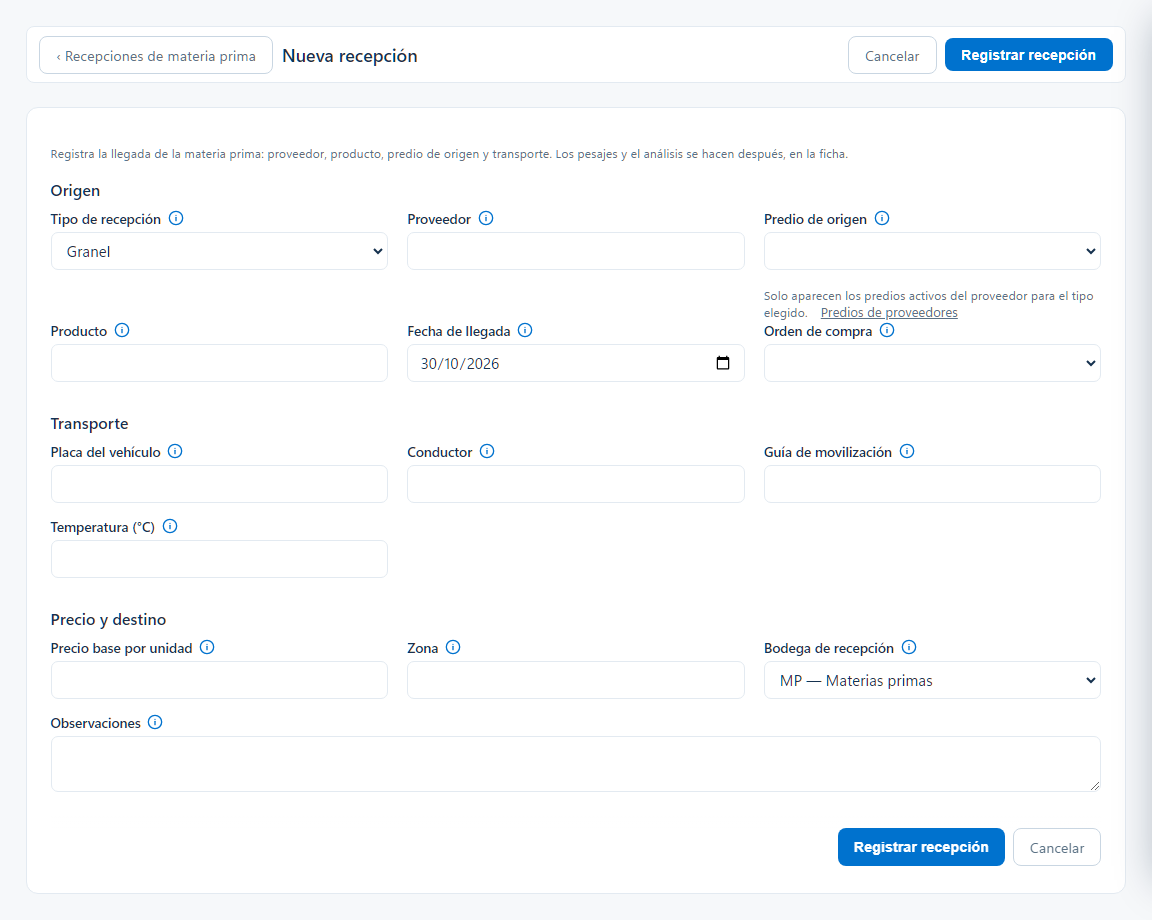
    The animal-type receipt records head count and live weight, with the animal intake table (average live weight, carcass temperature and pH). A lot of underweight animals out of specification is rejected with its reason and returned to the supplier without entering inventory.

  4. Ante-mortem inspection and settlement

    The ante-mortem inspection critical control point (CCP) requires the veterinarian's signature. The producer settlement deducts the pork levy per head (COP $15,184 per head in 2025) and creates the purchase invoice.

  5. Slaughter

    The slaughter recipe is a breakdown: from 100 kg live weight come chilled carcass 78%, offal 12% and blood 4%. The routing weighs the hot carcass and controls chilling with a 7 °C critical control point at the center of mass.

  6. Cutting with a scale

    From 100 kg of chilled carcass come leg 24, loin 12, shoulder 14, ribs 10, belly 9, trim 15, fat 8 and bone 8 kg. Every cut leaves with its lot and the actual scale weight (by hand or imported from the file), and the cost is allocated by weight or by relative sales value.

  7. Chorizo

    The chorizo recipe is a formula: trim, fat, ice, seasoning and curing salt. Every material carries its loss and its operation, and cooking at 72 °C is a critical control point.

  8. Pieces, kilograms and shipping

    Inventory keeps pieces and kilograms per lot. The GS1-128 barcode label carries the actual weight; on shipping, the delivery note is weighed and the customer pays for the actual kilogram.

  9. Toll processing and reports

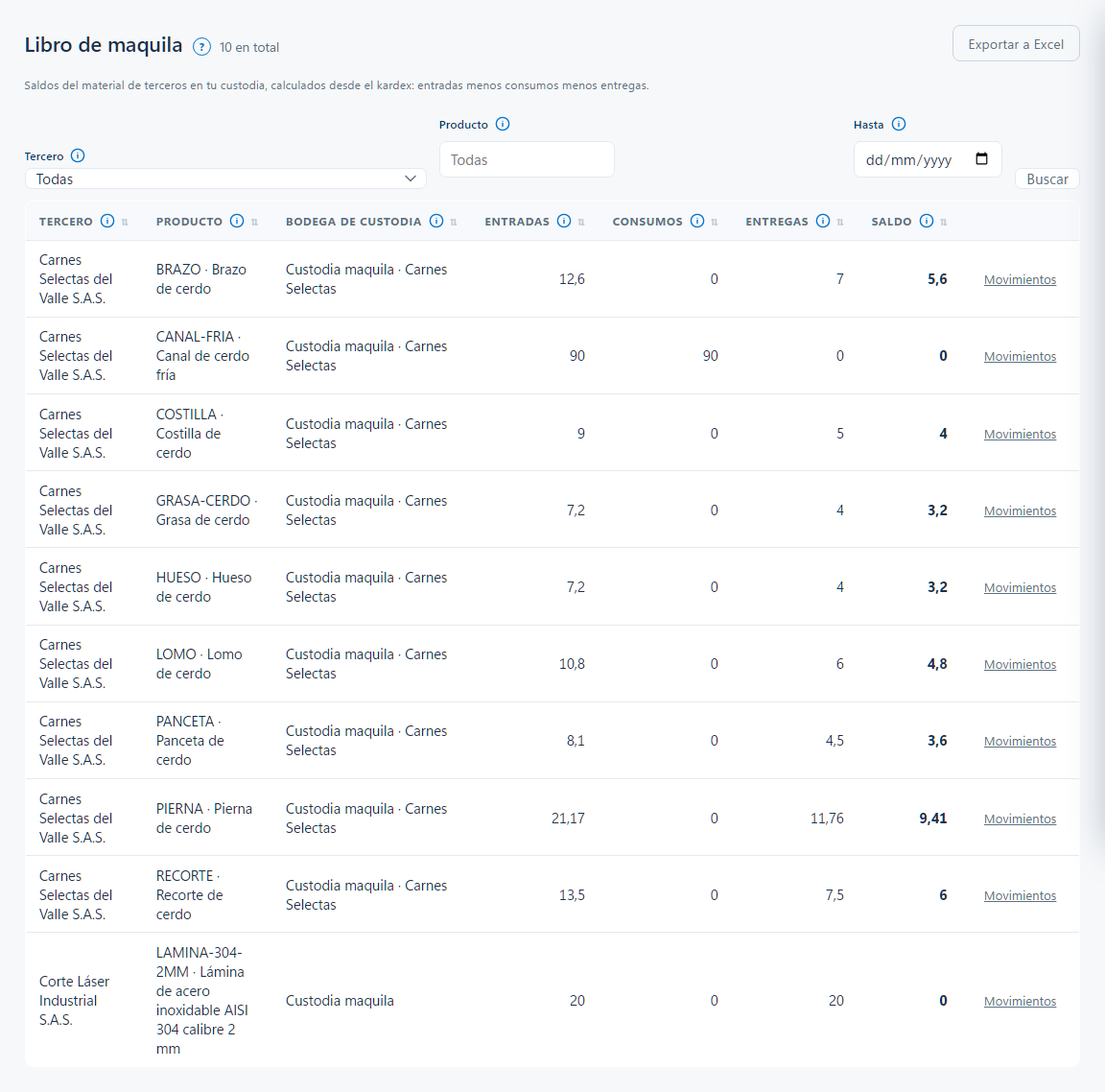
    If a customer brings their own carcass, it stays in custody at zero cost and only the service is invoiced. The SNR levy report and the ICA animal inventory are generated in Excel or PDF for you to upload.

What the pack installs

01Twenty products

Piglet, live hog (per animal, catch weight), compound feed, medication with a 14-day withdrawal period, hot and chilled carcass, offal, blood, the eight cuts, seasoning, curing salt, ice and chorizo, with eight categories.

02Animal intake table

Average live weight, carcass temperature and pH, with deduction or rejection ranges for intake and the ante-mortem inspection.

03Pork levy

Per-head levy rule (COP $15,184 in 2025, 32% of one day's minimum wage), deducted from the supplier and posted to its account, with effective dates.

04Five work centers and three routings

Finishing and holding pens, slaughter and dressing line, cutting room, sausage and cooking room, and packaging. Routings for slaughter (ante-mortem, dressing, hot carcass weighing, chilling), cutting (cutting and weighing per piece, packaging) and chorizo (grinding and mixing, stuffing and cooking, packaging).

05Four template recipes

Finishing (growth), slaughter and cutting (breakdowns with allocation by relative sales value) and chorizo (formula).

06Three critical control points

Ante-mortem inspection with the veterinarian's signature, carcass chilling to a maximum of 7 °C and chorizo cooking to a minimum of 72 °C.

07Catch weight label

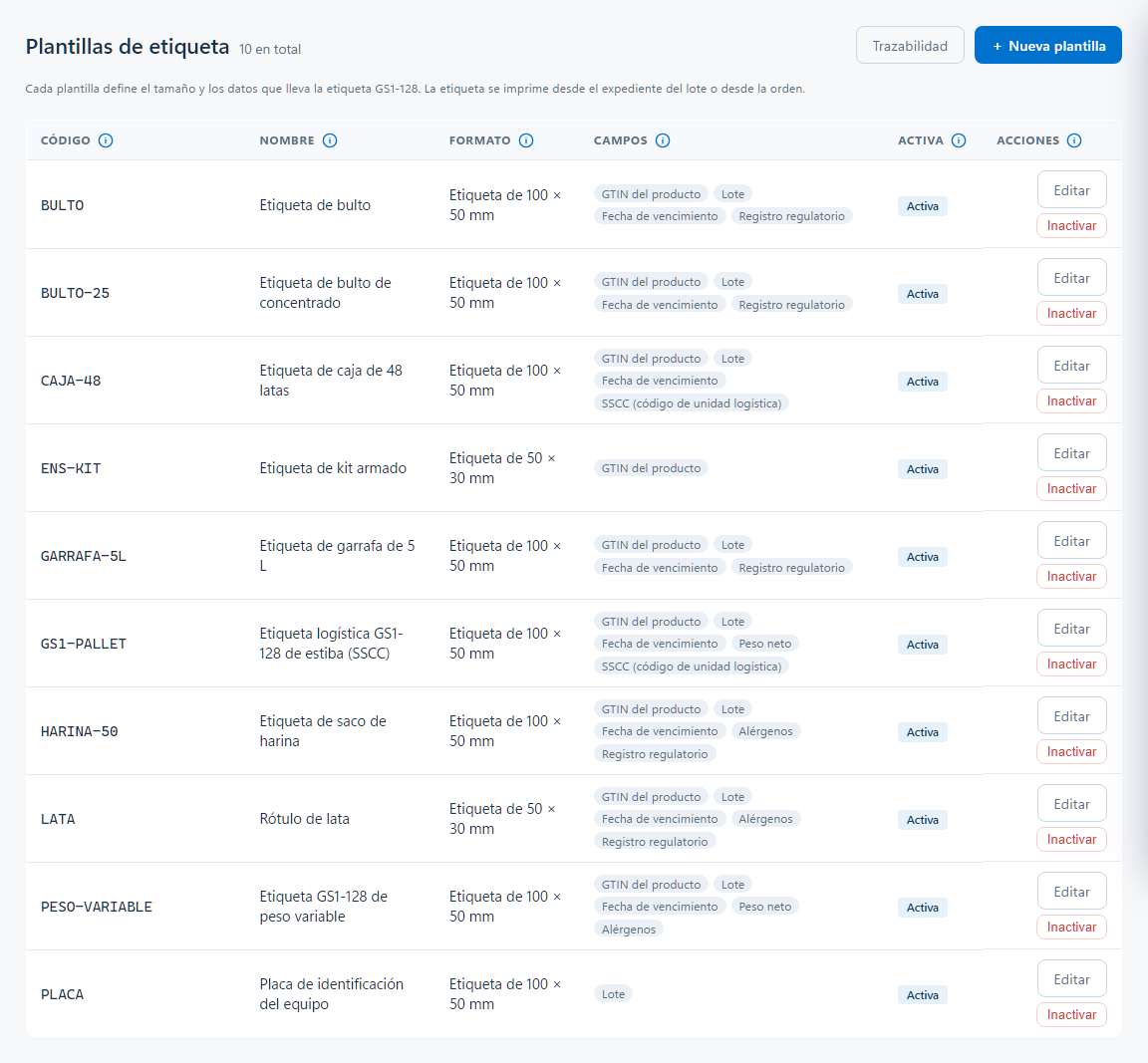
GS1-128 barcode template with the actual weight of each piece, lot and expiry, for large retail chains.

08Two pack reports

SNR pork levy report (per producer: head count, base and amount) and ICA animal inventory (receipts, issues and balance per product; ICA is Colombia's agricultural authority), in Excel or PDF.

09Plant terminology

"Cut sheet", "Cuts", "Farm lot", "Merge pen" and "Lot/order" on the screens.

10Demo data

The "C3" farm with ICA premises registration, 200 piglets in one lot, 10 live hogs ready for slaughter, chilled carcass, trim, fat and sausage inputs in stock, and the movement permit as a registration.

Case

Example: a cutting job, a toll job and a rejection

Figures from the demo company, as they appear on the screens.

20 hogsreceived live from the C3 farm with weight and head count
15 hogsrejected for low weight, with the reason and the supplier nonconformance closed
100 kgof chilled carcass cut into eight cuts, with two scale weighings
COP $1,252,642.42actual cost of the cutting, allocated by weight or by value among the cuts
50 kgcut under toll processing for a customer who brought their own carcass
COP $67,831.22cost of the toll service for the plant, invoiced as a service

The customer's material entered the custody warehouse at zero cost and the toll ledger shows their balance; another finished toll job is awaiting its invoice. The cut inventory is shown in pieces and in kilograms per lot, the cuts delivery note was weighed and the GS1-128 barcode label carries the actual weight. The SNR levy report and the ICA animal inventory come out of the pack ready to upload.

Regulations it covers, and how

Law 1500 of 2011 and Decree 1648 of 2015: pork levy

32% of one day's minimum wage per head slaughtered. The levy rule deducts it on the settlement, posts it to the fund's account, and the SNR levy report is generated in Excel or PDF for you to upload to the Porkcolombia platform (Porkcolombia is the pork producers' association).

ICA Resolution 8940 of 2024: internal animal movement permit

Move animals under a GSMI per trip (the internal animal movement permit of ICA, Colombia's agricultural authority) and reconcile it with the premises inventory. The permit is recorded as a lot document and the ICA animal inventory shows receipts, issues and balance per product.

ICA Resolution 2640 of 2007: biosecurity and withdrawal period

Medication records with their withdrawal period and a ban on shipping animals within the withdrawal. The lot inherits the release date set by the withdrawal, and material requirements planning does not count it as available until that date.

Decree 1500 of 2007 and Resolution 240 of 2013: inspection and cold chain

Ante- and post-mortem inspection, carcass at 7 °C at the center of mass and records per lot: ante-mortem and chilling critical control points with signature, and a lot record in PDF.

Resolution 2674 of 2013: processed meat products

Chorizo cooking critical control point and records per lot for sausages, with traceability of the chorizo back to the trim and fat lots and the originating carcass.

Connected with the rest of OpenBusiness

The farm, slaughter, cutting and shipping touch purchasing, inventory, sales, accounting and customers and suppliers without anyone typing twice.

  • ✓The animal settlement creates the purchase invoice to the producer with the per-head levy as a line.
  • ✓The supplier card shows their farm with the ICA premises registration (ICA is Colombia's agricultural authority); the toll customer's card, their balance in custody.
  • ✓Inventory keeps pieces and kilograms per lot, and the Sales delivery note is weighed line by line before issue.
  • ✓The toll service invoice starts as a draft and is finished and issued in Sales.
  • ✓Every order leaves its consumption, labor, overhead and completion in accounting, with joint cost allocation among carcass, offal and blood, and among the cuts.
  • ✓An automation flow alerts when a lot is about to expire and when the movement permit or the premises registration is about to expire.

Your plant at a glance

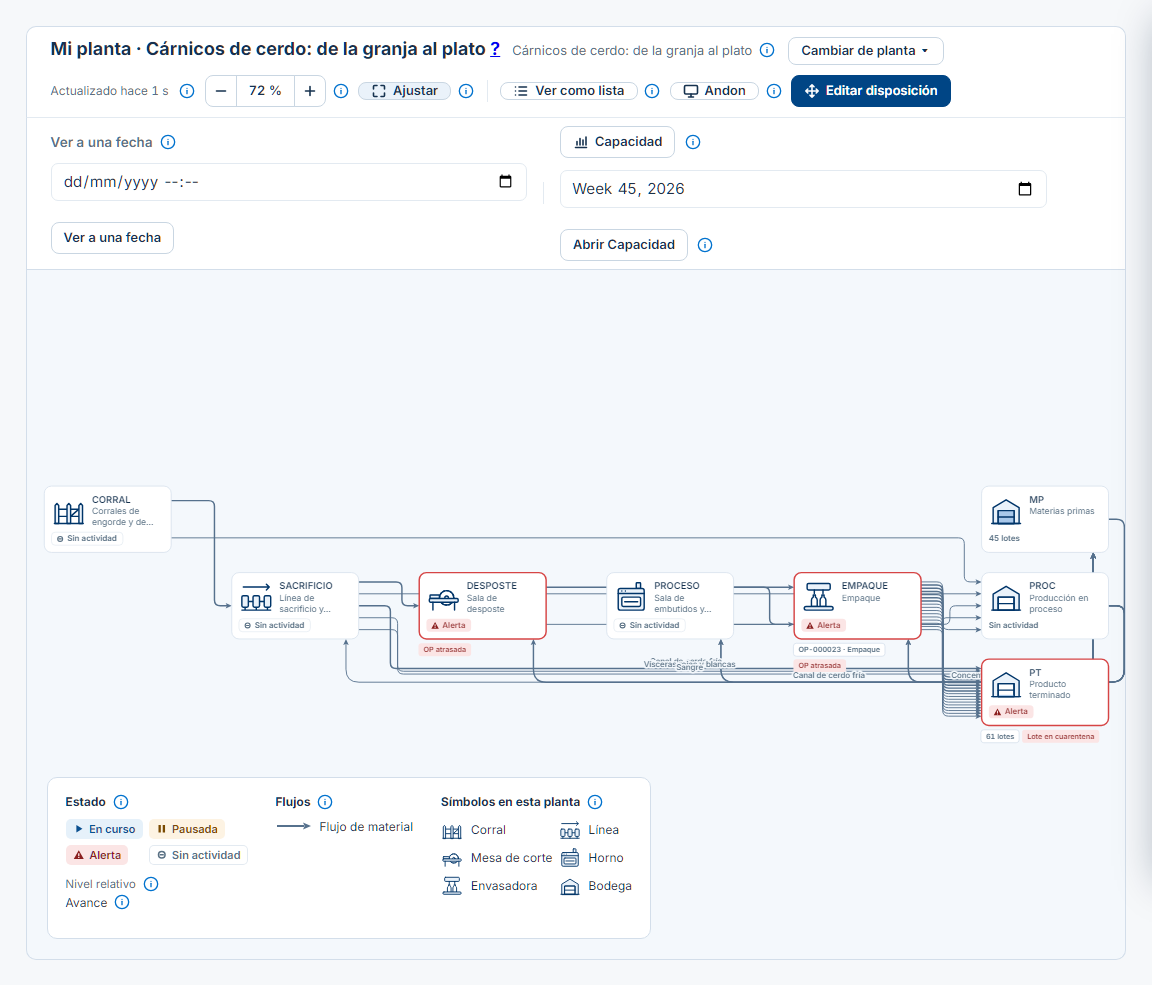
My plant draws the path of the animal with what the pack sets up: pens, slaughter line, cutting room, sausage and cooking room, and packaging. Each room shows the order in progress, pauses with their reason and quality alerts; each warehouse shows its lots.

My plant for the meat plant with pens, slaughter, cutting, sausages and packaging, each one with its status
From the pens to packaging in My plant, room by room.

What it looks like

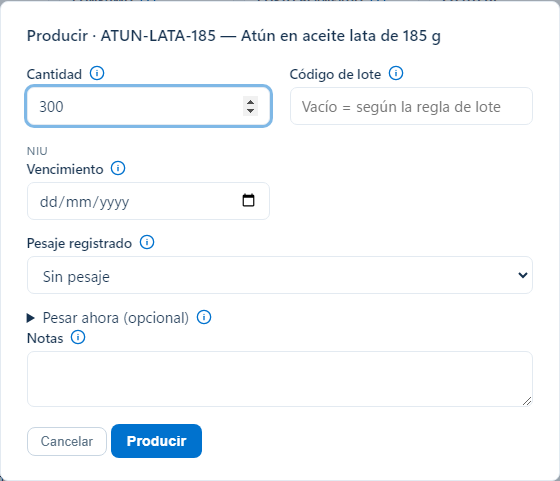
Produce output dialog with lot and scale weight
Every cut leaves with its lot and its actual weight.
Toll ledger with the carcass balance in custody per customer
The toll ledger: how much of each customer's material is in custody.
Label templates, including the GS1-128 catch weight barcode label
The catch weight label with the actual weight.
Creating an animal receipt with head count and live weight
The animal receipt with head count and live weight.

Frequently asked questions

How do I manage the finishing lot?

As a long-running production order with the growth recipe: it consumes feed by week and medications with their withdrawal period, records mortality and delivers live hogs with their cost per kilogram. The lot inherits the release date set by the withdrawal and cannot be slaughtered before it.

Is the levy calculated on its own?

Yes. The per-head rule is deducted on the producer settlement, goes to its accounting account, and the SNR levy report gathers head count, base and amount per producer. You generate it in Excel or PDF and upload it to the platform.

How is the customer charged for the actual kilogram?

Inventory keeps pieces and kilograms per lot. On the delivery note every line is weighed, the quantity is recorded in actual kilograms and on issue the pieces are deducted. The GS1-128 barcode label carries the weight of each piece.

Can I cut a customer's carcass?

Yes. The customer's carcass enters a custody warehouse at zero cost, is cut with a toll-type order and only the service is invoiced, per kilogram, lot or head. The toll ledger keeps their balance and statement.

How is the cost split among the cuts?

The cutting recipe declares every cut with its yield and the allocation rule (by weight or by relative sales value); bone and fat can go as by-products. On close, the actual cost is allocated and every cut ends up with its cost per kilogram.

What happens with a lot of animals that does not meet the standard?

It is rejected with its reason, returned to the supplier without entering inventory, and a supplier nonconformance can be opened.

Does the cutting room scale connect?

The system imports the file your scale software generates, with a column map you configure and test once. You can also record gross, tare and net by hand.

See your plant in OpenBusiness

Try the pork pack's demo data, download the brochure or talk to sales and we will show you the farm, cutting and shipping by actual weight with your own figures.

✓ Twenty products
✓ Animal intake table
✓ Pork levy