OpenBusiness by Tradebook
Product
Cleaning and facility management

Staffing contracts by site, special services, supplies at cost, AIU and per-worker annex.

SCPEAB
Private security

Staff per post with surcharges, uniforms and PPE with signed records, training with expiry dates.

SCPEFI
Temporary staffing and outsourcing

Workers on assignment, pre-invoice per worker, electronic payroll and PILA costed to the client.

PESCFI
Distribution and consumer goods

Routes and collections with Trade360, inventory movement records per warehouse, filling and packing, catch weight, batch labels.

COABSC
Retail, stores and restaurants

Point of sale with electronic POS document, online store, marketplaces and inventory.

COABFI
Importers and trading companies

Import and export checklists, import declaration costs included in inventory and foreign currency operations.

ABFICO
Manufacturing and industry

Recipes and bills of materials, production orders, actual cost, make-to-order, purchasing and batches.

ABPEFI
Technical service and maintenance

Field work orders with forms and evidence, support with agreed response times and spare parts tracked in inventory.

SCABCO
Government contractors and suppliers

Contracts with Colombia’s SECOP II procurement platform, adjustments based on inflation, minimum wage or tax units, agreed service times, insurance policies and document history.

SCFIPE
Agribusiness

Harvest or livestock intake with weighing, quality and settlement; batches and traceability; field staff.

SCPEAB
Food and beverage

Batch recipes, signed critical control points, traceability to origin, catch weight and harvest settlement.

ABFICO
Chemicals, cleaning products and cosmetics

Percentage formulas with versions, pH and viscosity as critical points, health notification and data sheets.

ABFICO
Recommended suites:COSalesSCServices and ContractsABSupply and ProductionFIFinancePEPeople
Sector pack · Rice mill

Production for rice mills From paddy on the scale to the bag on the shelf, with the grower settlement done

The rice pack gets the mill ready in one click: green paddy intake with weighing, moisture, impurities and broken grain analysis, minimum regulated price per zone, rice grower levy, agricultural withholding and advances; drying, silo consolidation, milling as a breakdown recipe with joint cost allocation, packaging into bags and the weekly purchase report for SIRIARROZ, the rice-purchase report, generated for you to upload.

Back to Production

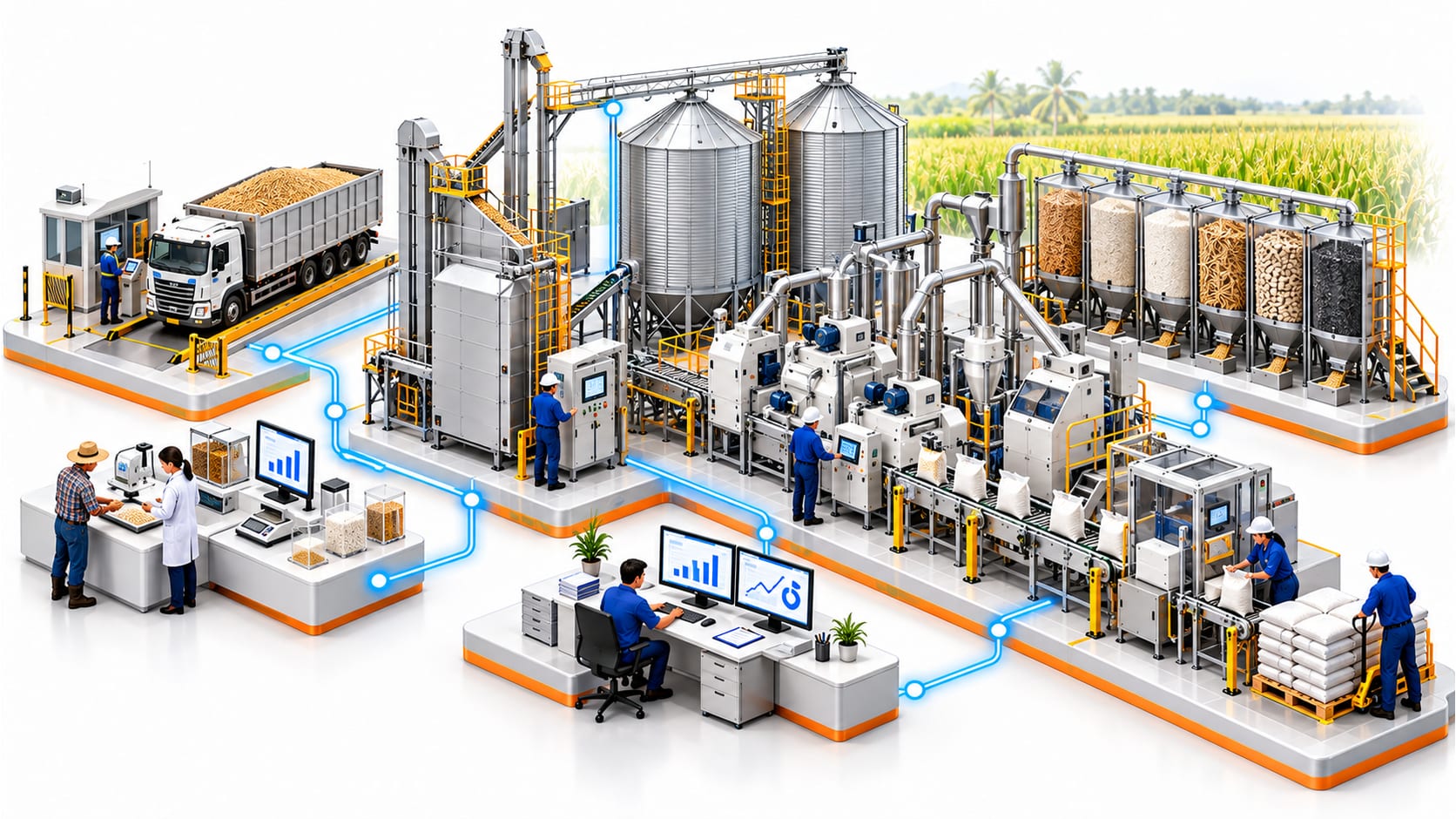
Rice mill with a paddy truck on the scale, silos in the background and an operator reviewing the receipt on a tablet

Who it is for

  • ✓Mills that buy green paddy from growers and settle by quality, with a minimum regulated price and a grower levy.
  • ✓Plants that dry, store in silos and mill, and need to know what head rice really costs when the same paddy yields broken rice, brewers' rice, rice flour, bran and husk.
  • ✓Mills that provide drying or milling services to other businesses and must keep each customer's balance.
  • ✓Companies that report their paddy purchases weekly and want the report to come out of the system, not a spreadsheet.

The mill's process, step by step

The pack follows the grain's real path. Every step happens on a Production screen and leaves its lot, its cost and its evidence.

  1. Intake on the scale

    The green paddy truck arrives at 18 to 25% moisture. The gatehouse records gross weight and tare by hand or imports the file your scale generates. The raw material receipt is in Weighed status, with the originating farm taken from the supplier card.

  2. Sample and analysis

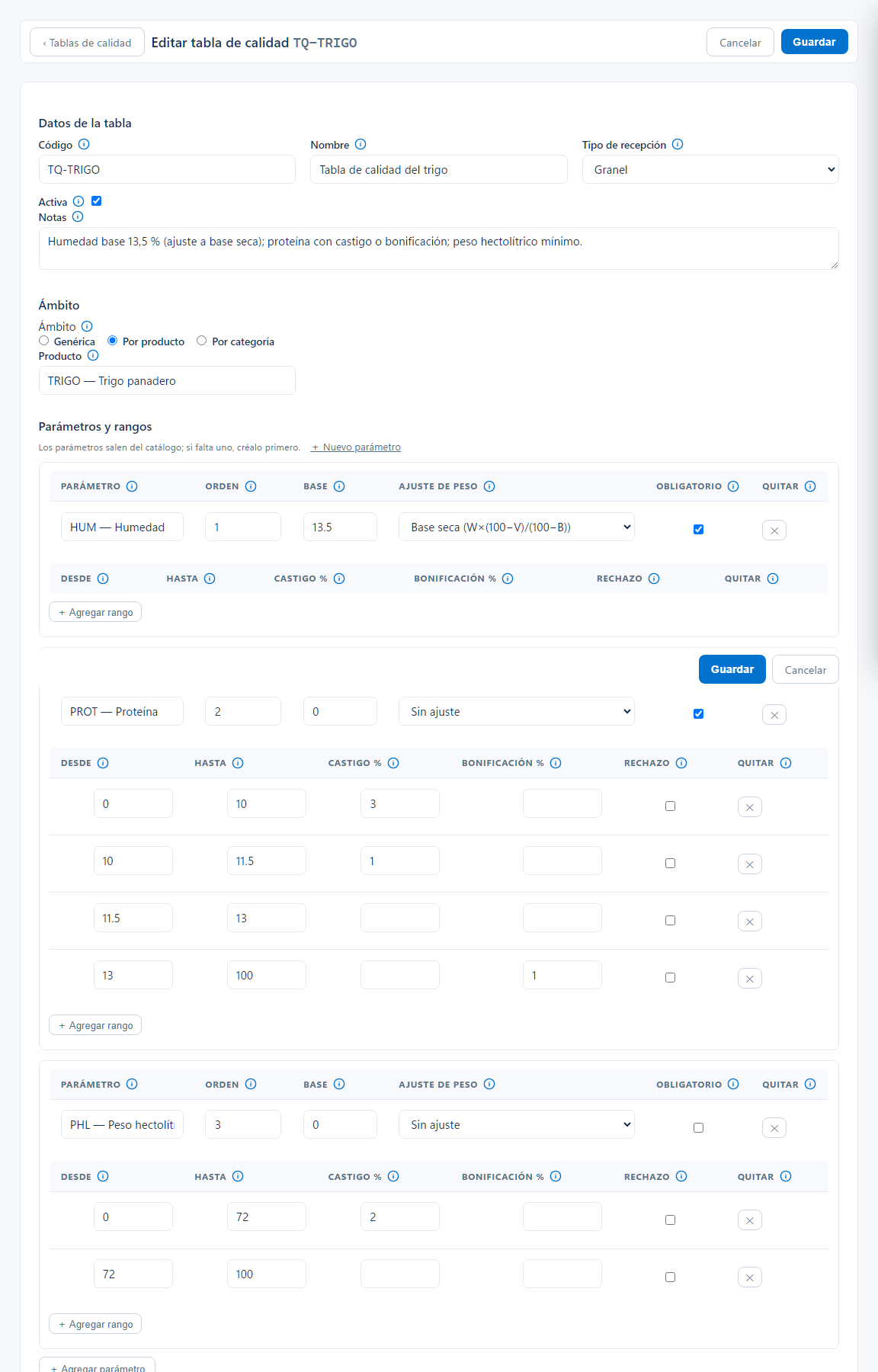
    The lab measures moisture, impurities, broken, chalky and red grain. The paddy quality table adjusts the weight to a base of 13% moisture and 2% impurities, on a dry basis and in cascade, and applies the broken-grain deduction: none up to 5%, 2% between 5 and 10% and 5% above that. A receiving inspection approves or rejects the lot.

  3. Grower settlement

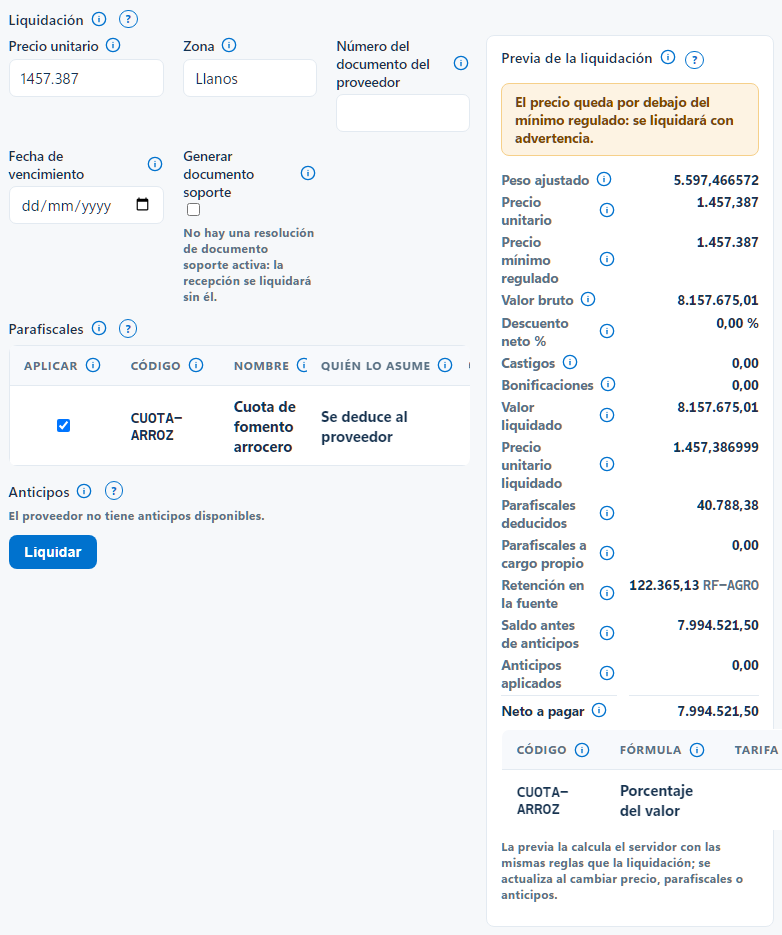
    The preview shows the adjusted weight, the zone price validated against the regulated minimum, the quality deductions, the 0.5% rice grower levy deducted from the supplier, the agricultural withholding and the offset of advances, oldest first. On settlement, the system creates the purchase invoice and, if the grower is not required to invoice, the DIAN support document (DIAN is the tax authority). The settlement PDF is handed to the supplier.

  4. Pre-cleaning and drying

    A production order with the drying recipe turns green paddy into dry paddy: for example, 1,000 kg of green paddy yield 920 kg of dry paddy with an 8% loss. The drying critical control point checks the maximum grain temperature (45 °C) and final moisture (12 to 13%), with the signature of the person responsible.

  5. Silos and silo lots

    Several receipts are consolidated into a silo lot. The system keeps the share of each receipt in the child lot, inherits the earliest expiry and the most restrictive status, and traceability keeps working through the blend. Closing the silo opens a new lot.

  6. Milling with co-products

    The milling recipe is a breakdown: from 1,000 kg of dry paddy come head rice 60% (main product), broken rice 8% and brewers' rice 1% (co-products by relative sales value), rice flour 1% and bran 8% (by-products at net realizable value), husk 20% (by-product with no cost) and a 2% loss. The routing runs through husking, whitening, polishing and size grading.

  7. Packaging

    A packaging order turns bulk head rice into 5 kg bags: 1,000 kg of head rice and 200 pouches give 200 bags. The bag label prints with product, lot and expiry.

  8. Toll manufacturing for customers

    If the mill provides drying or milling services, the customer's paddy enters a custody warehouse at zero cost, is processed with a toll-type order and only the service is invoiced. The toll ledger keeps each customer's balance.

  9. Month-end close and report

    The production close compares the overhead applied with the actual expense of each cost center. The SIRIARROZ rice-purchase report summarizes the weekly paddy purchases by municipality with metric tons, average price, gross value, settled value and average moisture, impurities and broken grain, in Excel or PDF, ready to upload.

What the pack installs

01Mill products and units

Green paddy, dry paddy, head rice, broken rice, brewers' rice, rice flour, bran, husk, the 5 kg bag and the packaging (5 kg pouch and 50 kg sack). Units for the 50 kg sack, percentage and degrees Celsius; products are handled in kilograms and units.

02Paddy deduction table

Parameters for moisture, impurities, broken, chalky and red grain. Base moisture 13% and base impurities 2% on a dry basis; deduction ranges for broken grain. Each mill can adjust the ranges without programming.

03Minimum regulated price per zone

Minimum prices per zone with effective dates (Llanos COP $1,457,387 per metric ton and Centro COP $1,589,489 per metric ton from January 1, 2025). On settlement, the system validates the price and warns or blocks if it is below the minimum.

04Rice grower levy

Levy rule of 0.5% on the purchase value, deducted from the supplier and posted to its account, with effective dates. It appears as a line on the settlement and on the purchase invoice.

05Work centers, routing and recipes

Work centers for the dryer (silo type), milling line and packaging; the milling routing with husking, whitening, polishing and grading; and three approved template recipes: drying (formula), milling (breakdown) and 5 kg packaging.

06Joint cost allocation

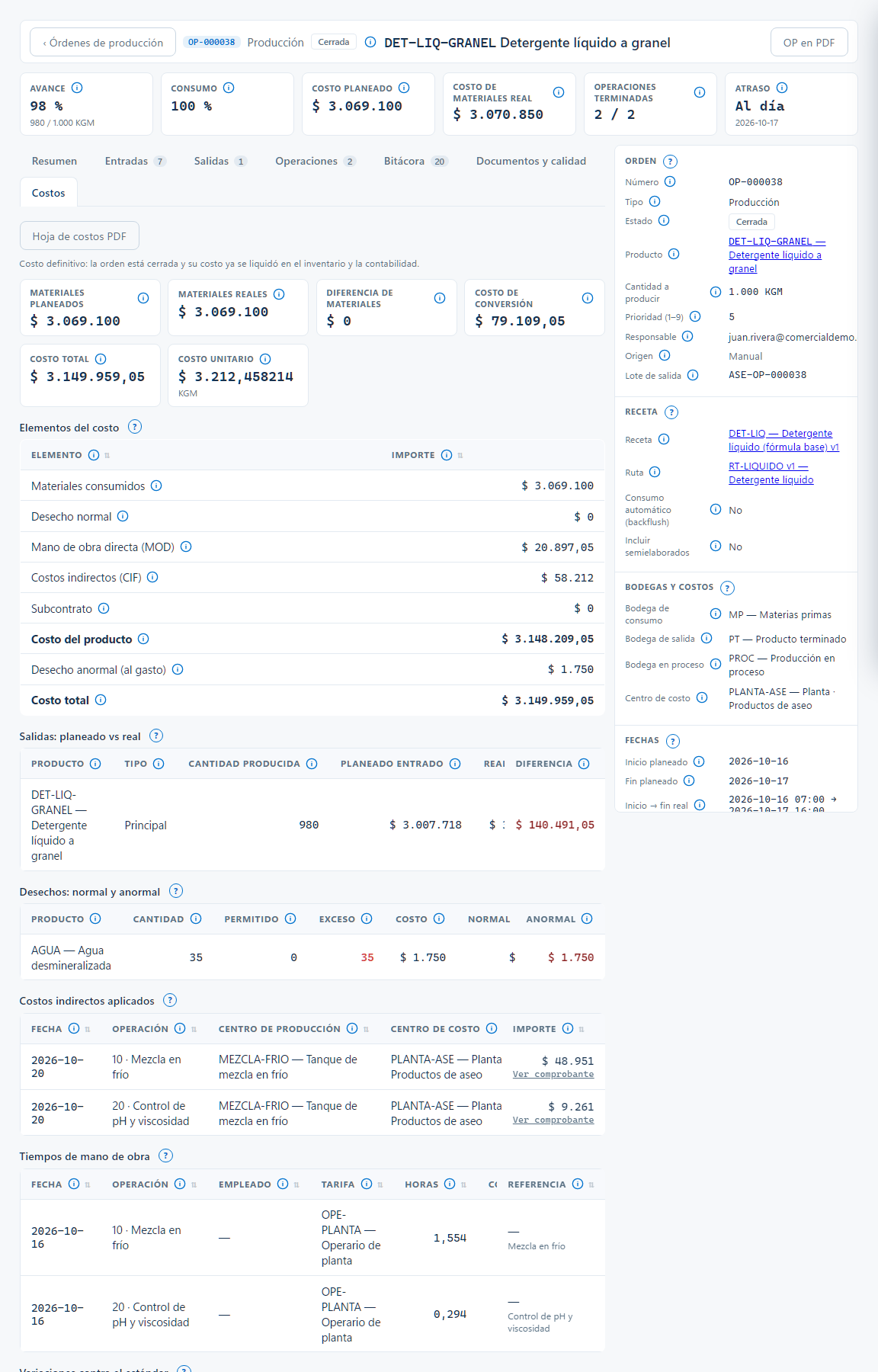
The actual milling cost is allocated among head rice, broken rice and brewers' rice by relative sales value; rice flour and bran deduct their net realizable value and husk carries no cost. That way the by-product does not inflate the main product, as the inventory accounting standard requires.

07Critical control points and lab

Drying control plan (maximum temperature, final moisture and signature) and paddy lab analysis plan at intake. An out-of-range result holds the lot.

08Mill terminology

The screens say "Milling formula", "Paddy", "Milling products", "Consolidate in silo" and "Silo lot" instead of the generic names.

09Rules, reasons and label

Replenishment rule for the sack with minimum and maximum, the mill's own downtime and scrap reasons, and the bag label with barcode, lot and expiry.

10Demo data

The "La Esperanza" farm in the Llanos, Fedearroz (the rice growers' federation) as a toll customer, 10,000 kg of dry paddy in a silo lot and 500 sacks, to walk through the full process from day one.

Case

Example: a settled paddy receipt

This is what a real receipt looks like in the demo company, from the scale to the purchase invoice.

10,000 kgnet: gross 25,000 kg minus tare 15,000 kg
8,782.55 kgadjusted weight at 22% moisture and 4% impurities
COP $12,543,579.15settled value at COP $1,457,387 per metric ton, validated against the minimum
COP $62,717.90rice grower levy of 0.5%
COP $188,153.69agricultural withholding deducted
COP $9,292,707.56net payable after the COP $3,000,000 advance

Afterwards, the silo consolidation cost COP $437,217 and the milling of 1,000 kg of dry paddy closed at an actual cost of COP $1,657,805.88, allocated by relative sales value among its products, with the bran deducting its net realizable value. The previous month's close showed COP $800,000 of overhead under-absorption at the mill plant, posted on its voucher. All in the system, with no spreadsheets on the side.

Regulations it covers, and how

MADR Resolution 241 of 2025: minimum price and SIRIARROZ

A regulation of MADR, Colombia's Ministry of Agriculture: minimum prices per zone with effective dates that the system validates on every settlement, and the weekly paddy purchase report by municipality with prices, metric tons and quality. The system generates the report in Excel or PDF for you to upload to SIRIARROZ, the rice-purchase report.

Law 101 of 1993 and Law 67 of 1983: rice grower levy

The levy rule withholds 0.5% of the purchase value from the producer, posts it to the fund's accounting account and shows it on the settlement and the purchase invoice.

Agricultural withholding

The withholding concept for agricultural purchases comes configured and editable, and is deducted on the settlement.

Resolution 2674 of 2013: good manufacturing practices

Production records per order, lot control, change history protected against tampering and a lot record in PDF with consumptions, operators and critical control points.

Resolution 719 of 2015: risk classification

White rice is low risk and carries an INVIMA sanitary notification (INVIMA is the health regulator). The registration is kept with its validity and the system alerts before it expires.

Resolution 5109 of 2005: labeling

The bag label carries a legible lot and expiry date, with a barcode.

Connected with the rest of OpenBusiness

Intake, milling and packaging do not live on their own: every step touches purchasing, inventory, accounting and sales without anyone typing twice.

  • ✓The settlement creates the purchase invoice with its levy and withholding lines, and applies the advances the grower had.
  • ✓The receipt's lot enters inventory in quarantine until the lab clears it; silo and milling lots carry their quality status on the lot card.
  • ✓Every consumption, completion and settlement leaves its accounting voucher; the month-end close compares overhead applied against the plant's actual expense.
  • ✓Material requirements planning (MRP) takes the bag orders and proposes when to mill and how many sacks to buy.
  • ✓An automation flow emails the grower the PDF of their settlement when it is settled.
  • ✓If your accounting lives in another business management system (ERP), the settlement and the milling leave you the accounting records with your accounts.

Your plant at a glance

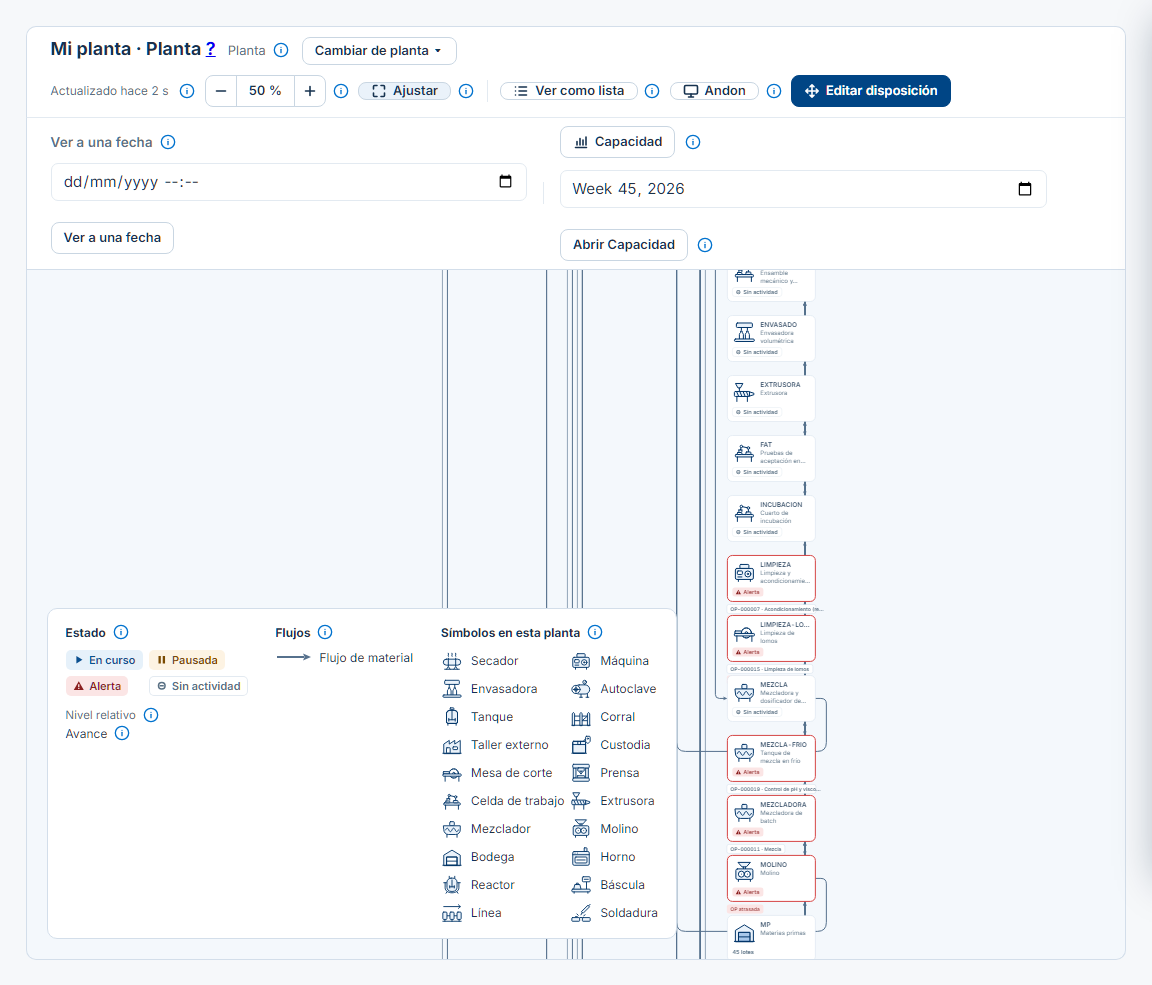
When the pack is installed, My plant draws the mill on its own: the paddy dryer, the milling line and packaging, with the warehouses the grain moves through. Each piece of equipment shows the order it is running and whether it is paused and why; each warehouse shows its lots with a relative level. One click takes you to the order or the lot.

My plant for the rice mill with the paddy dryer, the milling line, packaging and their warehouses, each one with its status
The rice mill in My plant: dryer, milling and packaging with their status.

What it looks like

Settlement section of a paddy receipt with price, deductions, grower levy, withholding, advance and net
The grower settlement, line by line, before confirming.
Paddy quality table with the moisture, impurities and broken grain ranges
The paddy deduction table, editable by the mill.
Cost sheet of a milling order with the allocation among head rice, broken rice, brewers' rice, rice flour and bran
The actual milling cost allocated among its products.
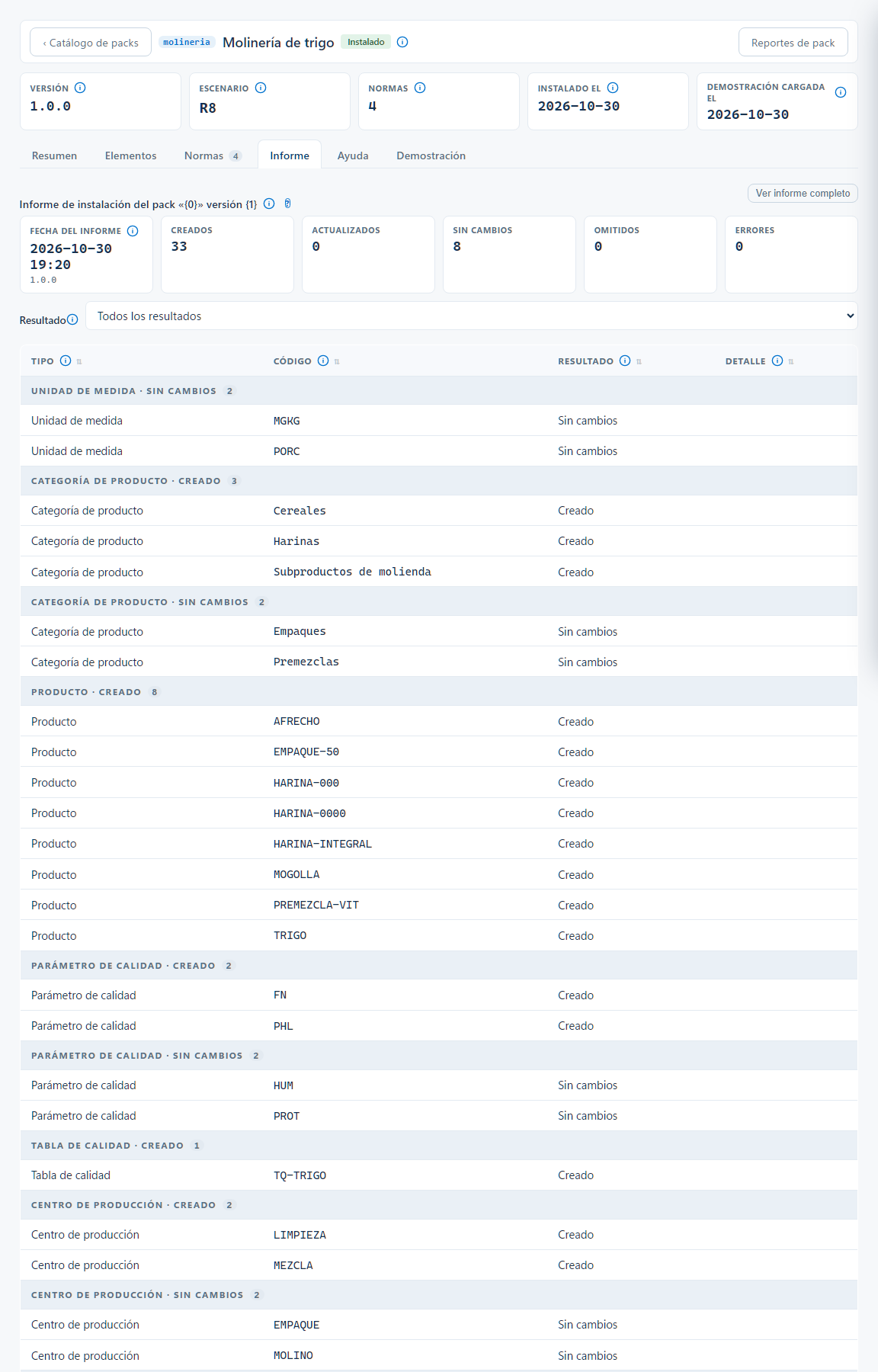
Install report of a pack with the items created
The install report says what the pack created.

Frequently asked questions

Is the SIRIARROZ report sent on its own?

No. The system generates the weekly report with the columns the regulation requires (municipality, metric tons, average price, gross and settled value, moisture, impurities and broken grain) in Excel or PDF, and you upload it to SIRIARROZ, the rice-purchase report platform.

Can I change the deductions in the quality table?

Yes. The pack's table comes with base moisture 13%, base impurities 2% and broken-grain deduction ranges, but each mill edits its ranges, bonuses and rejections without programming. What your company edits, the pack does not overwrite on reinstall.

How do I handle harvest advances?

Advances to the grower are recorded as prepayments, and the settlement offsets them oldest first before calculating the net.

What happens if the price falls below the minimum?

On settlement, the system compares the price with the regulated minimum of the zone in force and warns or blocks, depending on how your company configures it.

How do I know which farms a bag comes from?

The bag's lot comes from the milling lot, which comes from the silo lot, which keeps the share of each receipt. Backward traceability reaches each receipt and the farm recorded on the supplier card.

Can I dry or mill for other businesses?

Yes. The customer's paddy enters custody at zero cost, is processed with a toll-type order and only the service is invoiced, per kilogram or per lot. The toll ledger keeps the balance per customer.

Does the truck scale connect?

The system imports the file your scale software generates: you configure the column map once and test it. You can also record gross and tare by hand.

See your mill in OpenBusiness

Try the rice pack's demo data, download the brochure or talk to sales and we will show you intake, milling and the close with your own figures.

✓ Mill products and units
✓ Paddy deduction table
✓ Minimum regulated price per zone